Planning Voice is led by Maria, a Chartered Town Planner (MRTPI) with over 17 years of experience across local authority and private planning practice.
Planning Voice is led by Maria, a Chartered Town Planner (MRTPI) with over 17 years of experience gained across both local authority and private consultancy, giving her a thorough understanding of the planning system from both sides of the table.
Her local authority background was spent in development management, including in the West Midlands and South West, where she dealt with planning applications across a range of scales and types — from householder works to larger residential and commercial schemes. That experience developed a detailed knowledge of how case officers approach applications, what arguments they weigh, and how decisions are reached at delegated and committee level.
Moving into private practice, Maria has worked across England and Scotland, having applied that insight to work on behalf of clients navigating the same system — preparing and submitting planning applications, representations, objections, and appeal submissions across a broad caseload. Having operated on the applicant side, she understands how planning consultants frame cases and where the weaknesses in submitted material tend to be found.
That combination — of understanding how applications are constructed and how local authorities assess them — is what Maria brings to every objection she prepares. Her submissions are grounded in national and local planning policy, structured to address the material considerations that carry genuine weight, and written in the precise, evidence-led language that case officers, planning committees, and inspectors respond to.
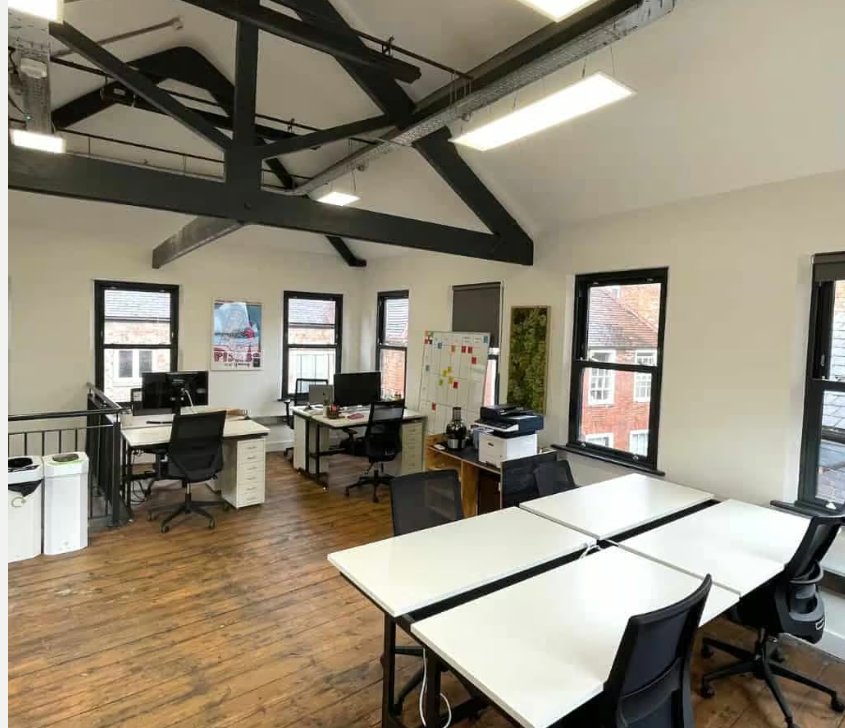
We are based at Works Social, a coworking space in Nottingham's Lace Market — but we work on planning applications nationwide across England, Wales, Scotland and Northern Ireland, with no geographic restrictions on the cases we take on.
16 Commerce Square, Lace Market, Nottingham, NG1 1HS
Maria is supported by a small team of Chartered Town Planners who share the same professional grounding. Between them, the team brings experience from local authority development management, private planning consultancy, and the Planning Inspectorate, as well as hands-on involvement in planning appeals across written representation, hearing, and inquiry routes.
That breadth means every case is handled by someone who has worked inside the system — and who knows what it takes to produce an objection that is taken seriously.
Having worked inside local authority planning departments, our team understands how planning officers assess applications, what weight they give to different types of representation, and how committee decisions are actually made. We write letters that speak directly to decision-makers.
We operate across the full extent of England, Wales, Scotland and Northern Ireland. For Welsh applications we engage with Future Wales: The National Plan 2040, Planning Policy Wales, and the relevant Technical Advice Notes. In Scotland, the planning system is governed by National Planning Framework 4 (NPF4) and the relevant Local Development Plans. In Northern Ireland, the Planning Policy Statement (PPS) series applies alongside local development plans. These frameworks differ significantly from the English NPPF, but our team has experience working across all jurisdictions.
Beyond our core planning expertise, we have access to a wider network of specialists including architects, landscape architects, engineers, ecologists, and surveyors — useful where technical issues require specialist input beyond the planning policy analysis.
We start every case by being honest about its prospects. If an application is clearly within policy and the concerns raised are unlikely to be material planning considerations, we will tell you — because proceeding on weak grounds serves no one. Our free initial assessment is genuinely advisory, not a sales exercise.
Where grounds exist, we take the time to understand the site fully — studying the council's planning portal, the application's planning history, comparable decisions in the area, and all submitted documents. Our letters are typically a minimum of three pages long, and some run to eight pages or more where the case demands it.
We also take your concerns seriously. Whilst planning decisions must be based on material planning considerations, understanding your specific concerns is essential to ensuring that our letter accurately captures what matters — and frames it in terms that count.
Loss of family housing, substandard rooms, parking stress
Serial resubmission, breach of conditions, overlooking
Loss of light, traffic on a bend, overdevelopment
Same plans refused twice previously, tunnel effect
Works Social, 16 Commerce Square is a late 19th century brick building in a gated courtyard in the heart of Nottingham’s Lace Market conservation area — one of Britain’s finest Victorian industrial heritage quarters, designated in 1969 as Nottingham’s first conservation area.
Adjacent to St Mary’s Church and High Pavement, Commerce Square sits among the dense red-brick warehouses that once formed the centre of the world’s lace industry. Today it is home to creative studios, architects, and independent consultancies who value its distinctive character.
We work remotely across England, Wales, Scotland and Northern Ireland with no geographic restrictions, but our Nottingham base places us in a city with a deep planning heritage.
Contact us for a free assessment. We'll advise you honestly on whether you have a case — before you commit to anything.